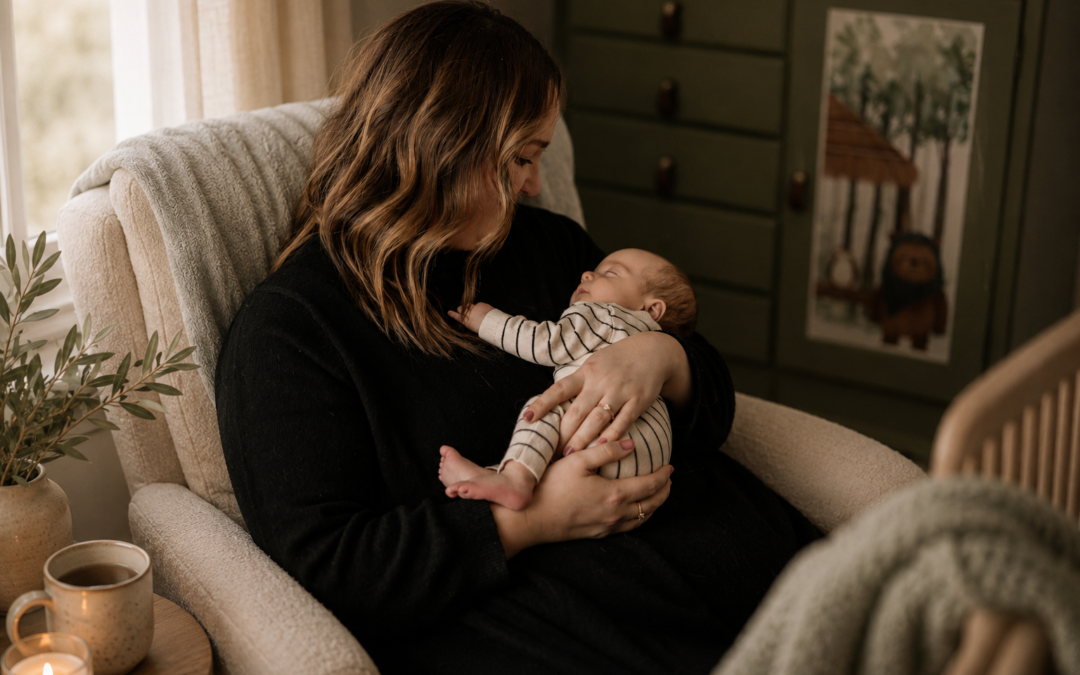
Letting go of perfection and choosing presence instead
Before becoming a mother, I thought I understood what motherhood would require of me.
I expected exhaustion, diapers, long nights, and learning curves.
What I did not fully expect was how deeply motherhood would expose the hidden places in my own heart.
The pressure.
The perfectionism.
The fear of failing.
The desire to do everything “right.”
The constant feeling that I should somehow be doing more.
Motherhood has a way of bringing all of those things to the surface.
And if I am honest, very little about my own motherhood journey has gone according to plan.
After walking through ten years of infertility and pregnancy loss, becoming a mother already felt sacred beyond words. I carried so many hopes, expectations, and carefully imagined visions of what those first months would look like.
But from birth onward, many things unfolded differently than I expected.
As someone who naturally likes structure, preparation, and control, that has stretched me deeply.
There have been feeding struggles, exhaustion, emotional overwhelm, constant adjustments, and countless moments where I have had to release expectations I did not even realize I was holding so tightly.
I exclusively pump for my son, which has been both beautiful and incredibly demanding in ways I never fully anticipated. So much of my day revolves around schedules, ounces, timing, cleaning pump parts, managing supply, exhaustion, and trying to care for both my baby and myself simultaneously.
Some days feel tender and deeply meaningful.
Some days feel overwhelming.
And many days feel like both at the same time.
I think many mothers quietly carry that tension.
Not because they do not love their children deeply.
But because modern motherhood often feels like an endless performance evaluation.
There is pressure to optimize everything:
- feeding
- schedules
- sleep
- milestones
- routines
- enrichment
- nutrition
- developmental activities
- emotional regulation
- homemaking
- self-care
- marriage
- work
- faith
And somewhere underneath all of it, many women begin believing that good motherhood means flawless motherhood.
But the more I grow, heal, and learn, the more I am beginning to believe something entirely different:
Children do not need perfect mothers.
They need present ones.
Presence Shapes Children More Deeply Than Perfection
One of the most freeing things I have learned through both counseling education and motherhood is that secure attachment is not created through perfection.
It is created through consistent emotional connection.
Psychologically speaking, children thrive when caregivers are:
- emotionally responsive
- attuned
- safe
- available
- nurturing
- willing to repair after hard moments
Attachment research has repeatedly shown that children do not need flawless caregivers in order to develop secure attachment. In fact, healthy attachment is often built through cycles of rupture and repair.
That means emotionally safe parenting is not parenting where we never get overwhelmed, frustrated, tired, or emotionally dysregulated.
It is parenting where repair happens afterward.
Where grace exists.
Where connection remains available.
Where children learn:
“Even when hard moments happen, love is still here.”
That changes everything.
Because many mothers are carrying crushing pressure to perform perfectly when what their children actually need most is emotional safety and connection.
Eye contact.
Comfort.
Warmth.
Gentleness.
Presence.
These ordinary moments shape children profoundly.
And honestly, I think this reflects the heart of God beautifully.
Scripture never presents God as emotionally absent or perfectionistically demanding toward His children.
He is patient.
Compassionate.
Near to the brokenhearted.
Slow to anger.
Abounding in faithful love.
As mothers, I think many of us unintentionally parent from the version of God we subconsciously believe in.
If we believe love must be earned through performance, motherhood can quickly become anxiety-driven.
But when we begin to understand the gentleness of Christ more deeply, it changes the atmosphere we create inside our homes.
Motherhood Has Slowed Me Down in Holy Ways
I used to measure productivity almost constantly.
How much I accomplished.
How efficient I was.
How much I could carry.
But motherhood has humbled me in ways I never anticipated.
There are entire days now that feel invisible by the world’s standards.
Rocking a baby.
Washing bottles.
Managing pumping schedules.
Folding tiny clothes.
Contact naps.
Starting over on the same tasks repeatedly.
And yet I think some of the holiest work happens in these ordinary moments.
Our culture often glorifies visible achievement while overlooking quiet faithfulness.
But Jesus consistently noticed small things.
Children.
Meals.
Conversations.
Touch.
Rest.
Presence.
He was never hurried in the way modern life trains us to be.
And I think motherhood has been gently teaching me to slow down enough to notice what actually matters.
Not perfection.
Connection.
A Regulated Mother Is More Valuable Than a Perfect Routine
One of the most important things I have learned through trauma-informed work is that children are deeply affected by the emotional state of the adults caring for them.
Children co-regulate through connection.
This means a caregiver’s nervous system often influences the emotional atmosphere of the home more than perfectly curated routines ever could.
That realization has challenged me deeply.
Because sometimes I become so focused on “doing everything right” that I neglect my own emotional regulation entirely.
Sometimes I spiral over schedules, routines, sleep, feeding, or whether I am doing enough.
Sometimes I feel guilty for being tired.
Sometimes I mourn the version of motherhood I expected while simultaneously feeling overwhelmingly grateful for the son I prayed so many years for.
Two things can exist together.
Joy and exhaustion.
Gratitude and grief.
Love and overwhelm.
That does not make us bad mothers.
It makes us human.
Children do not primarily need highly optimized mothers.
They need emotionally grounded ones.
Mothers who can:
- repair after hard moments
- regulate themselves
- create safety
- remain emotionally available
- extend grace to themselves and others
That does not mean we will always get it right.
It means we are learning.
Slowly.
And honestly, I think many mothers need permission to stop chasing impossible standards and start pursuing gentleness instead.
Gentleness with their children.
Gentleness with their homes.
Gentleness with themselves.
Because grace creates safer homes than perfectionism ever could.
Letting Go of the Myth of “Doing It All”
I think many women secretly feel like they are failing if they cannot hold everything together effortlessly.
But motherhood was never meant to be sustained through constant self-sacrifice without support, rest, or care.
Even Jesus withdrew to rest.
Even Jesus slowed down.
Even Jesus allowed Himself to be interrupted.
That perspective matters because many mothers are functioning in chronic nervous system overwhelm while believing they simply need to “try harder.”
But sometimes what we actually need is not more pressure.
Sometimes we need:
- rest
- support
- softness
- realistic expectations
- emotional honesty
- grace
Motherhood is already vulnerable enough without adding impossible standards on top of it.
And perhaps part of flourishing in motherhood is learning to release the need to constantly prove ourselves worthy.
The Kind of Motherhood I Want to Cultivate
I do not want my son to remember a mother who was constantly striving for perfection while emotionally absent from the moment in front of her.
I want him to remember warmth.
Safety.
Presence.
I want him to remember being held.
Being listened to.
Being welcomed emotionally.
I want our home to feel soft to land in.
Not because everything is perfectly maintained, but because grace lives there.
I want motherhood to shape me into someone more grounded, more compassionate, more emotionally aware, and more dependent on Christ.
Not someone performing constantly for approval.
And maybe that is part of what flourishing in motherhood truly looks like.
Not becoming perfect.
But becoming rooted.
Reflection Questions
- What expectations about motherhood am I carrying right now?
- Where do I feel pressure to perform perfectly?
- What helps me feel emotionally grounded as a mother?
- What kind of atmosphere do I want my children to remember?
- Where might God be inviting me into greater gentleness?
Scripture for This Season
“Let all that you do be done in love.”
1 Corinthians 16:14 (CSB)
“Can a woman forget her nursing child or lack compassion for the child of her womb? Even if these forget, yet I will not forget you.”
Isaiah 49:15 (CSB)
“Come to me, all of you who are weary and burdened, and I will give you rest.”
Matthew 11:28 (CSB)
Final Thoughts
Motherhood has a way of revealing both our deepest fears and our deepest capacity for love.
And perhaps flourishing in motherhood is not about finally mastering every routine, achieving perfect balance, or becoming endlessly productive.
Perhaps it is learning to remain rooted in grace while showing up imperfectly but wholeheartedly each day.
Because long after children forget whether the laundry was folded perfectly or the house stayed spotless, they will remember how home felt.
They will remember warmth.
They will remember safety.
They will remember love.
And honestly, I think that matters far more than perfection ever will.